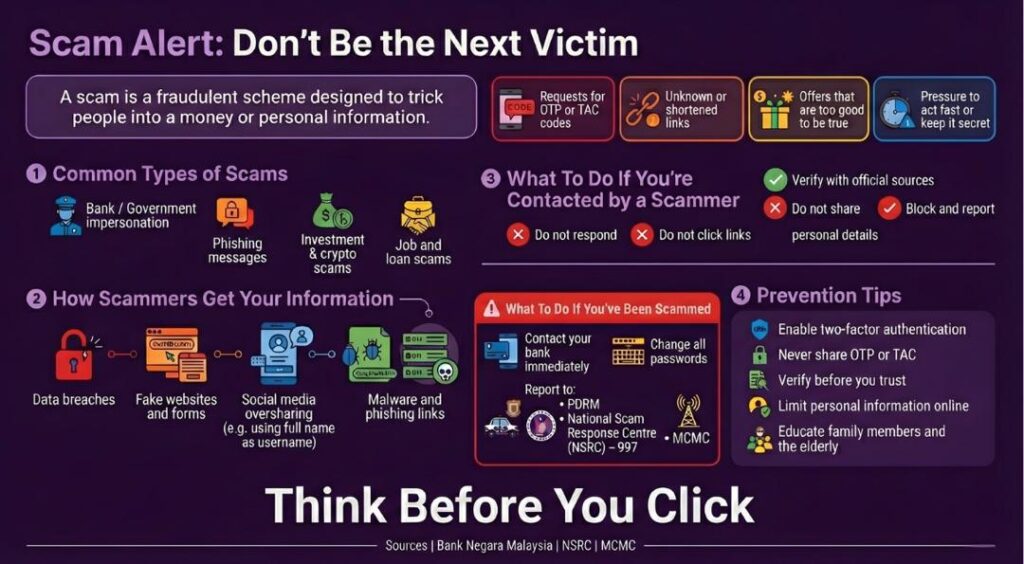
Knowing how a scam works is your first line of defense at a time when online dangers are always changing. The following visual provides you with a clear road map on how to recognize, stop, and react to these fraudulent schemes by dissecting the typical strategies used by scammers to compromise your financial and personal information.
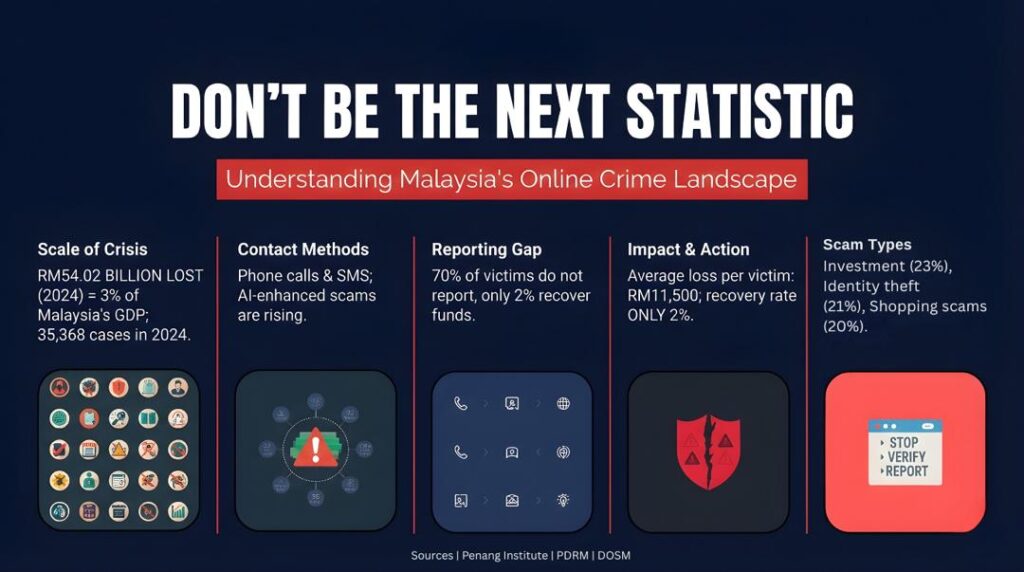
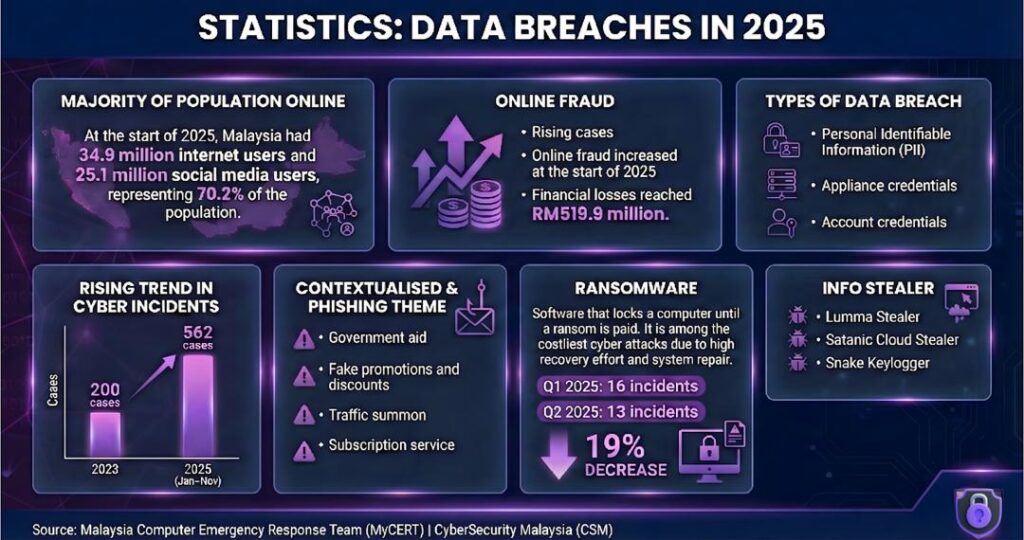
Knowledge is your best defense. Let’s break down this infographic to see how online crime is evolving in Malaysia.
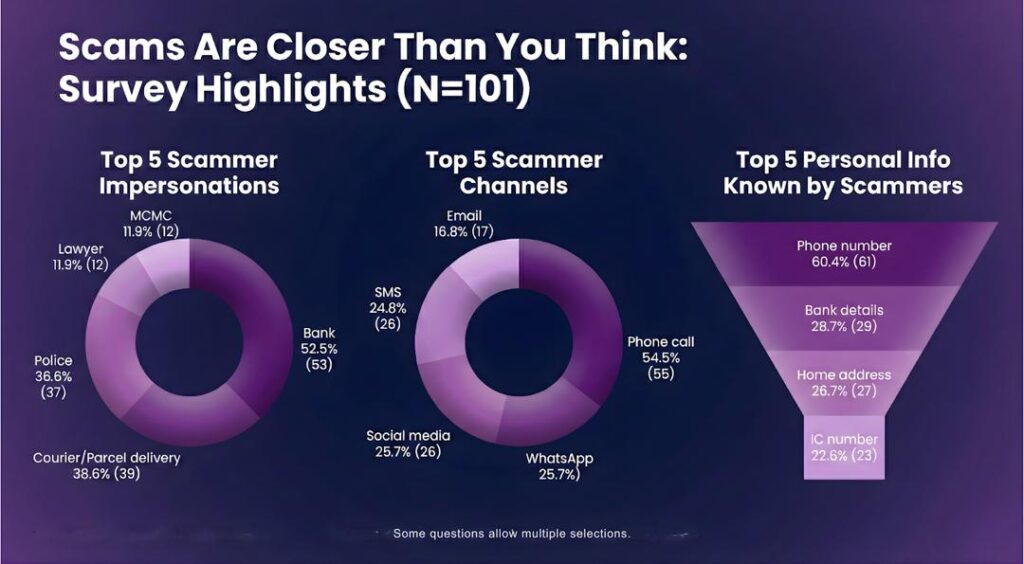
In light of the RM2.7 billion lost to cybercriminals in 2025, we surveyed 101 individuals to map out exactly how these scams happen. This infographic breaks down the 'scam lifecycle,' showing you how scammers start their approach.
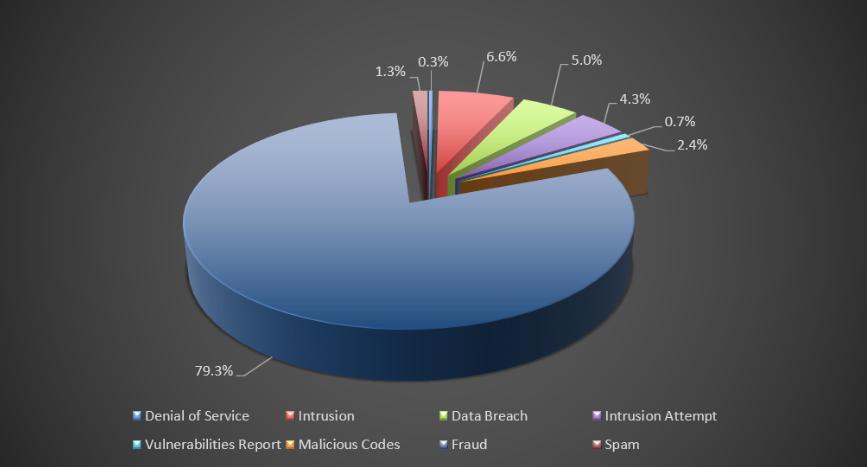
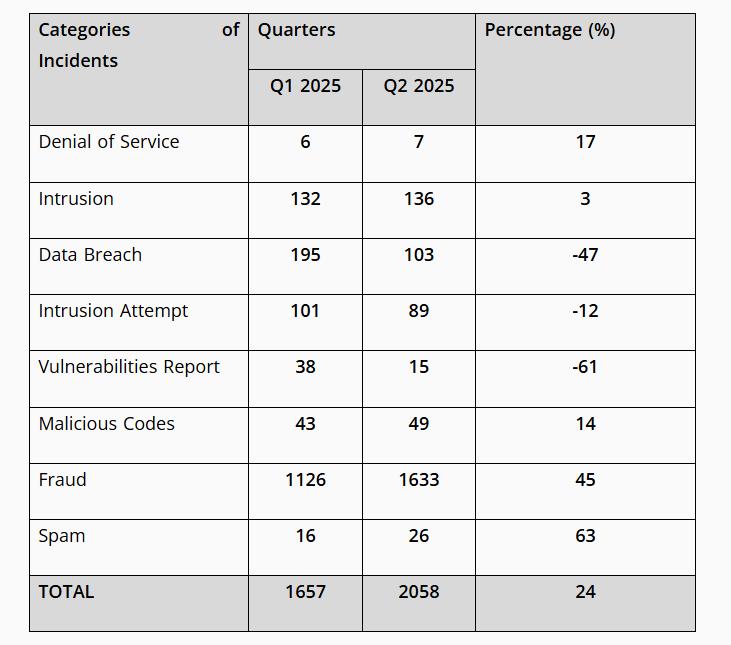
Based on MyCERT data, data breaches account for 5% of reported cybercrime incidents. Although not the largest category compared to threats such as denial of service or fraud, data breaches remain a significant concern because they involve the exposure of sensitive and personal information. This highlights the need for stronger data protection measures and increased cybersecurity awareness among organizations and internet users.
A data breach happens when sensitive or personal information is accessed, stolen, or exposed without authorization, creating serious risks for individuals and organizations. At the start of 2025, Malaysia recorded 34.9 million internet users and 25.1 million social media users (70.2% of the population), increasing exposure to cyber threats. MyCERT identifies three main data breach types: Personal Identifiable Information (PII), appliance credentials, and account credentials. Fraud remains widespread across society and businesses, made worse by low public awareness that criminals exploit, with 1,633 fraud incidents resolved this quarter, up 45% from Q1 2025. Ransomware is also expected to keep rising in 2025, so users and organizations must stay vigilant through strong password practices, cybersecurity awareness, and reliable backups supported by clear procedures, policies, and best practices.
MyCERT data reveals that 2025 saw a total of 298 reported data breaches.